INDIA
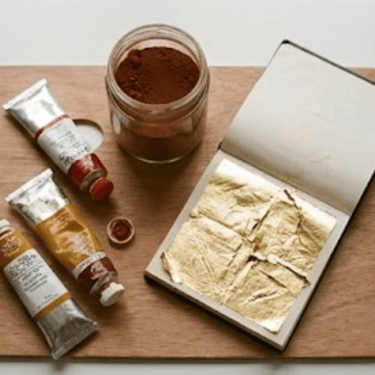
If the African Odyssey was the grounding of the physical body, the Indian Yatra was the ignition of the spirit. This collection documents a vertical ascent through the sacred geographies of the East, from the burning ghats of Kashi to the frozen peaks of Nepal and the mystic soil of Tamil Nadu. This journey explores the very architecture of the Divine. Characterised by the deliberate integration of authentic Sacred Ash (Vibhuti), Ganges Clay, and 24k Gold Leaf, these works capture the fierce grace of the deities and the alchemical transformation of the soul. It is a curated visual pilgrimage, moving from the noise of the world into the absolute silence of the Self.
TIME KEEPER (KALABHAIRAVA)
Provenance & Narrative:
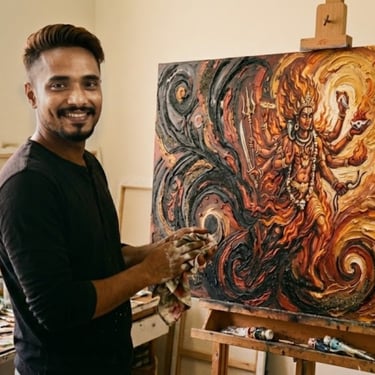
Before one can enter the sacred space of Kashi, the ego must first be surrendered to its guardian: Kalabhairava, the Lord of Time. Conceived after a visceral visit to the Bhairav Nath temple, this piece channels the intense, raw energy of a space where the polite masks of society are violently stripped away.
Material Architecture:
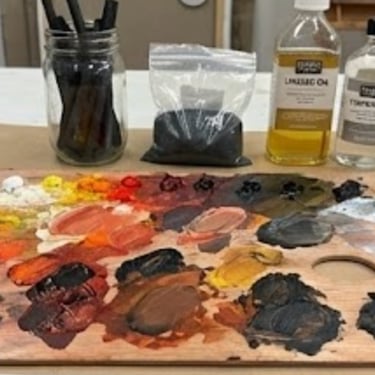
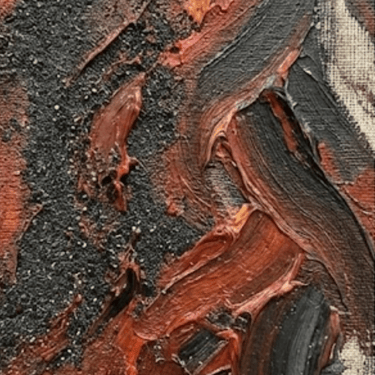
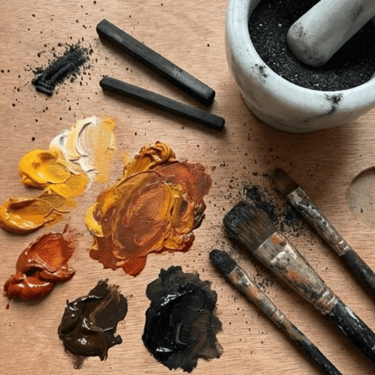
Medium: Oil, Charcoal & Black Sand on Linen.
Geographical Origin: Varanasi (Kalabhairava Temple Precinct), India.
Era: Yatra Phase I (2016).
Archive Ledger: #IND001: The Guardian Kaal Bhairavar.
MANIKARNIKA: THE FINAL ALCHEMY
Provenance & Narrative:
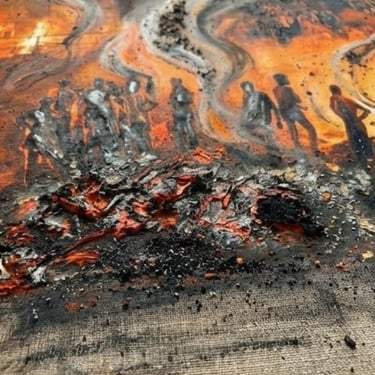
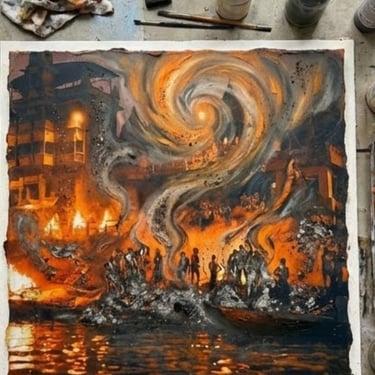
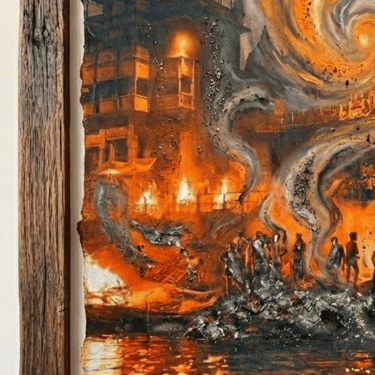
At the Manikarnika Ghat, the sacred fire never extinguishes. This artwork documents the ceaseless, thermodynamic transition of solid matter into pure energy. Sitting vigil by the burning pyres, the artist observed the ultimate philosophical truth of Anitya (Impermanence), translating this profound spiritual realization into a permanent physical and geological record.
Material Architecture:
Medium: Acrylic, Cold Wax & Authentic Wood Ash on Canvas.
Geographical Origin: Manikarnika Ghat, Varanasi, India.
Era: Yatra Phase I (2016).
Archive Ledger: #IND002: The Fire of Moksha.
THE WEAVER’S SUTRA
Provenance & Narrative:
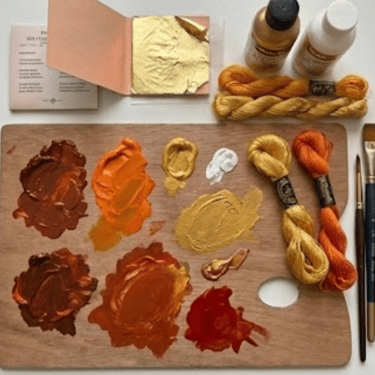
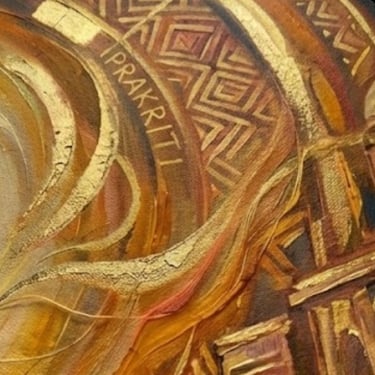
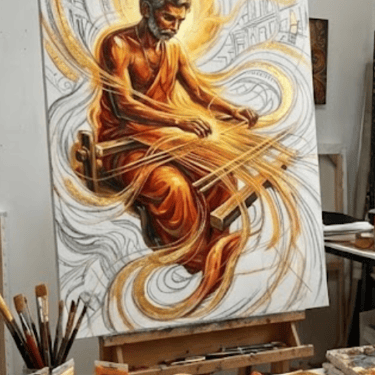
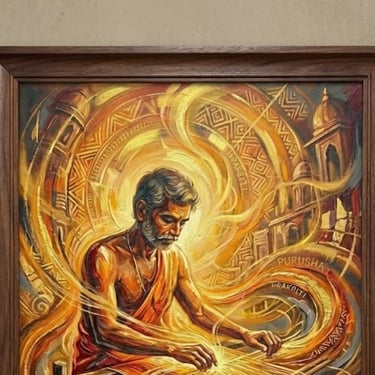
Varanasi is not merely a city of ash; it is simultaneously a city of gold. Inspired by the legendary master weavers of Banaras, this piece explores the metaphysics of the 'warp and weft'. It serves as a study of how delicate, individual threads of intention and consciousness are meticulously woven together to create the indestructible fabric of reality.
Material Architecture:
Medium: Mixed Media, Gold Leaf & Silk Thread on Canvas.
Geographical Origin: The Weavers' Quarter, Varanasi, India.
Era: Yatra Phase I (2016).
Archive Ledger: #IND003: The Golden Weave (Banaras Saree).
THE TEMPLE STATE: FIRE, SALT, STONE
The journey south into Tamil Nadu is a descent into profound density; here, the divine is not hidden, but carved into colossal stone and locked directly into the earth. This chapter of the Yatra traces ancient energy lines from the urban chaos of Chennai to the coastal stillness of Pondicherry and Rameswaram. Moving through the labyrinthine corridors of Madurai Meenakshi, pulsating with the fierce energy of the Mother, the journey finally dissolves at the feet of the holy mountain, Arunachala, in Thiruvannamalai. These artifacts explore the contrast between the fluid expansiveness of the ocean and the immovable silence of the mountain.
THE SIDDHAR'S PULSE
Provenance & Narrative:
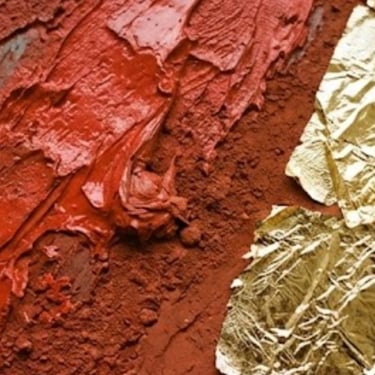
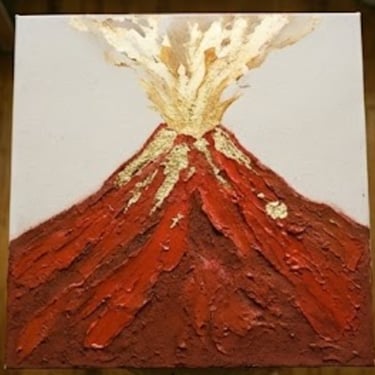
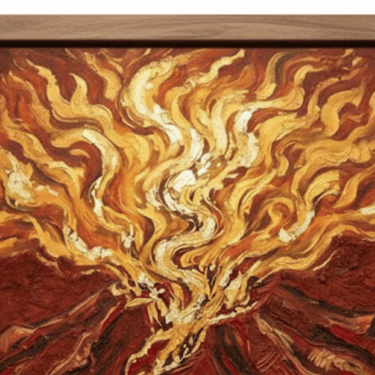
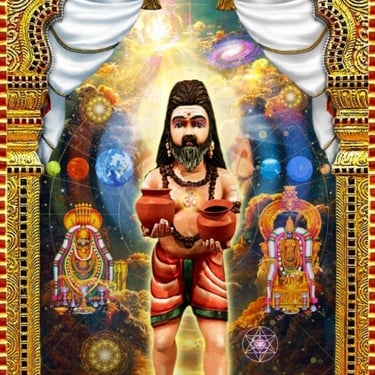
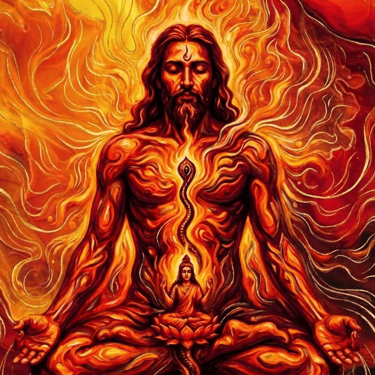
Thiruvannamalai is the axis of Fire (Agni), yet its deepest secrets are guarded by the lineage of the 18 Siddhars. During his Sadhana on the Girivalam path, Raajashri was granted the rare privilege to reopen and enter the Idaikadar Siddhar Samadhi. In that confined, consecrated space, the concept of 'time' dissolved, resulting in this painting that documents a massive surge of energy, a direct transmission from the Samadhi that flooded the body with heat and vibration.
Material Architecture:
Medium: Oil, Red Soil & Gold Leaf on Canvas.
Geographical Origin: Thiruvannamalai, India.
Era: Yatra Phase II (2018).
Archive Ledger: #IND004: The Mountain of Fire, #IND005: Idaikadar Siddhar (Digital), #IND006: The Anahata Surge.
THE LABYRINTH OF ABUNDANCE
Provenance & Narrative:
Madurai is not just a city of the Mother; it is a fortress guarded by history. This piece was born from a journey to uncover the roots of Madurai Veeran, the fierce guardian deity (Kaval Deivam) who protects the city gates. The investigation revealed the deep symbiosis between his protective force and the overwhelming, chaotic abundance of the Goddess Meenakshi.
Material Architecture:
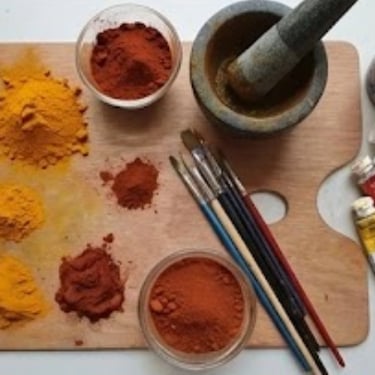
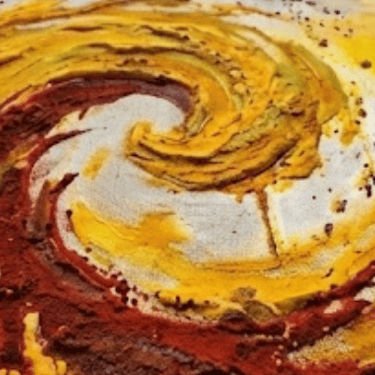
Medium: Mixed Media, Turmeric (Kumkum), & Temple Red Earth on Linen.
Geographical Origin: Madurai (The Inner Sanctum), India.
Era: Yatra Phase II (2018).
Archive Ledger: #IND008: The Guardian and the Goddess.
THE MERGER
Provenance & Narrative:
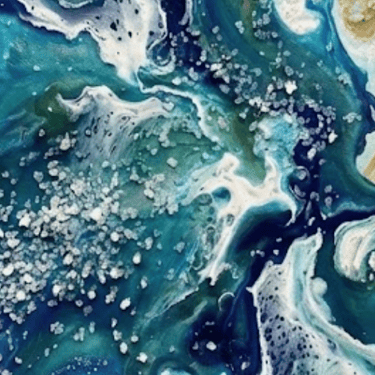
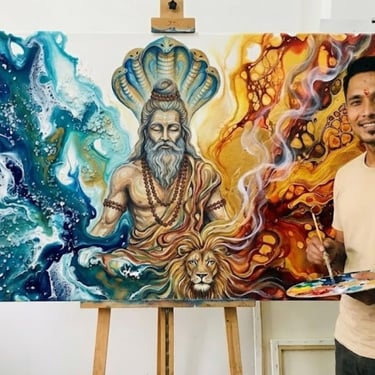
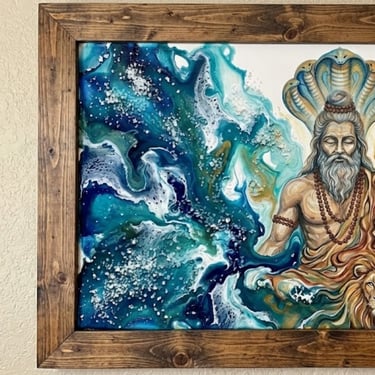
Rameswaram is the confluence of oceans, but here, it became the confluence of lineages. This piece documents a pivotal encounter with the Jeeva Samadhi of Patanjali Siddhar within the temple complex. In the presence of the father of Yoga, the intellectual mind ceased, allowing the non-dual truth (Advaita) of Adi Shankaracharya to shift from a philosophical concept into a felt physical experience.
Material Architecture:
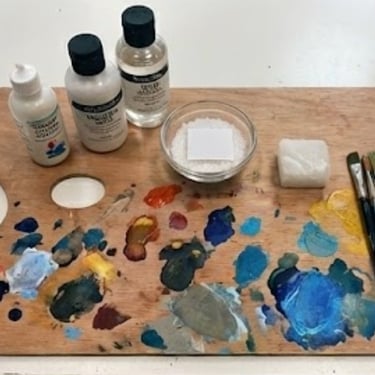
Medium: Fluid Acrylic, Sea Salt (from Dhanushkodi) & Temple Camphor on Canvas.
Geographical Origin: Rameswaram (Patanjali Shrine), India.
Era: Yatra Phase II (2018).
Archive Ledger: #IND007: The Ocean Samadhi (Rameshwaram).
THE VEL FREQUENCY
Provenance & Narrative:
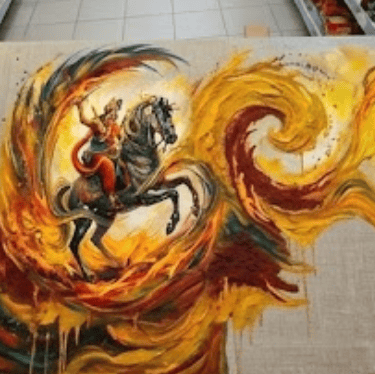
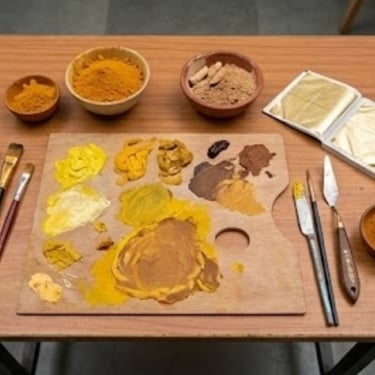
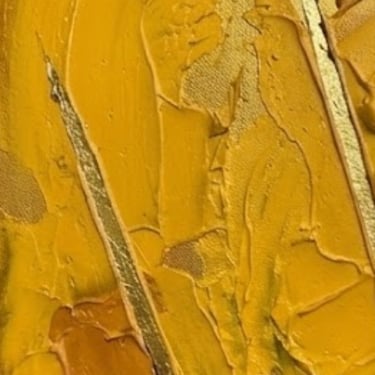
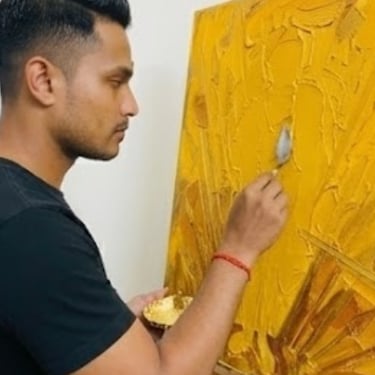
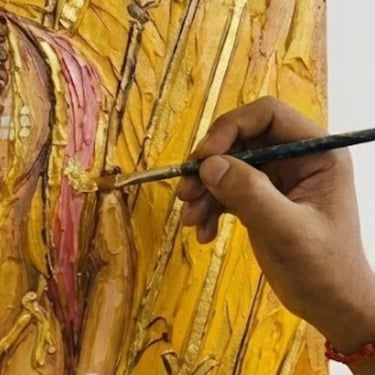
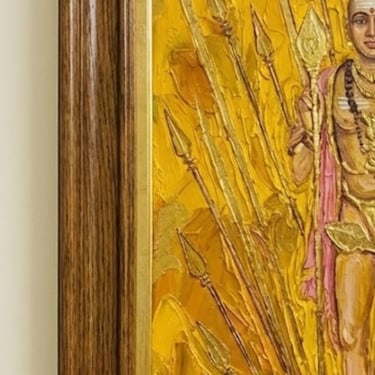
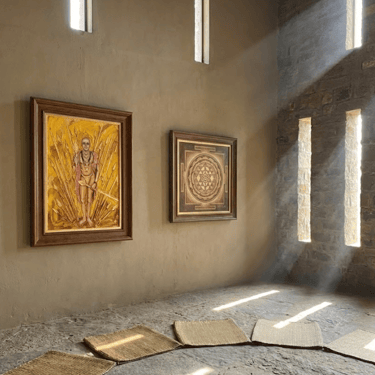
Palani is a hill of penance, home to Murugan in his aspect as the ascetic warrior, Dhandayuthapani, the one who wields the staff of wisdom. Conceived during the burden-shedding climb to the hilltop temple, this piece explores the energy of the Vel (Spear) as an instrument that pierces through ignorance. Heavy layers of turmeric and sandalwood yellows are punctuated by sharp, rising gold structures symbolizing the ascending kundalini and divine insight.
Material Architecture:
Medium: Mixed Media, Turmeric, Sandalwood Paste & Gold Leaf on Canvas.
Geographical Origin: Palani Hill, India.
Era: Yatra Phase II (2018).
Archive Ledger: #IND009: The Ascetic Warrior (Palani).
MUTTAI SIDDHAR
Provenance & Narrative:
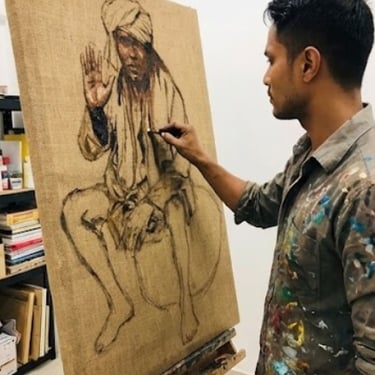
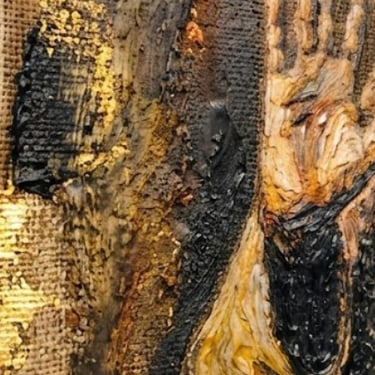
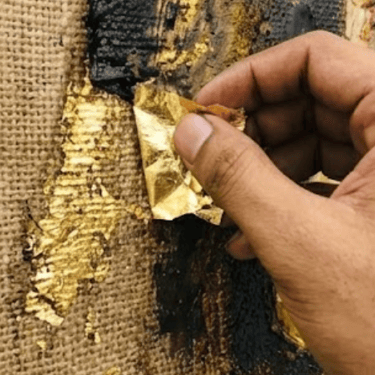
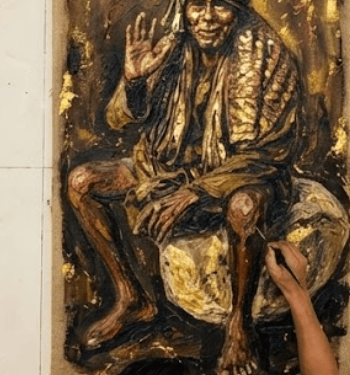
In the lineage of the Tamil Siddhars, enlightenment often hides in plain sight. This piece honors Alukku Muttai Sami ('The Saint in Dirty Rags'), a master who deliberately cloaked his immense power beneath an exterior of madness and filth to avoid worldly attention.
Material Architecture:
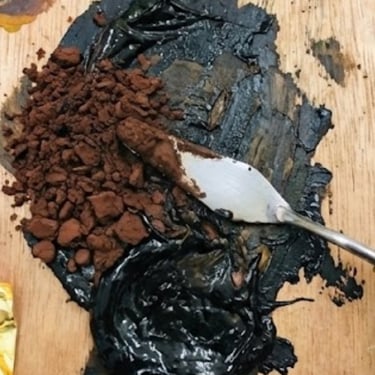
Medium: Oil, Raw Earth Pigments, Tar & Gold Underpainting on Burlap/Linen.
Geographical Origin: Tamil Nadu (Siddhar Shrine), India.
Era: Yatra Phase II (2018).
Archive Ledger: #IND010: The Hidden Radiance (Alukku Muttai Siddhar).
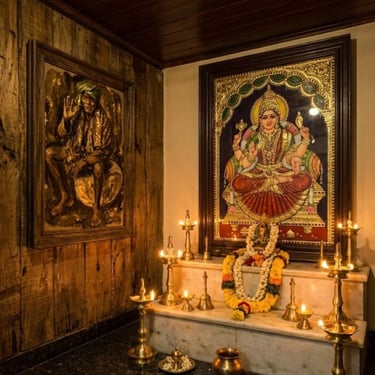
THE UNCARVED SAINT (SWAYAMBU)
ADI ARUNACHALESWARI (THE HANDS OF DESTINY)
Provenance & Narrative:
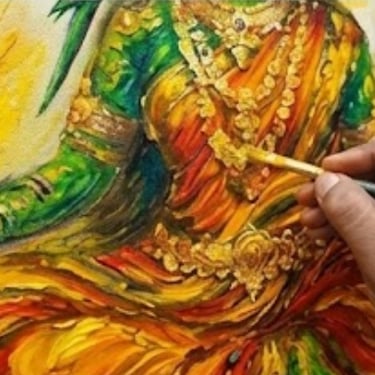
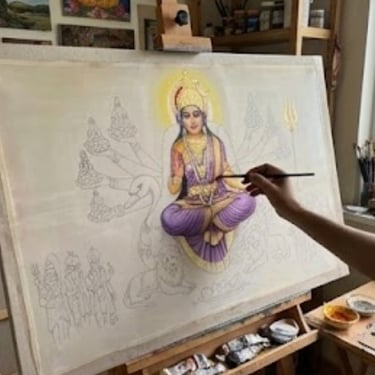
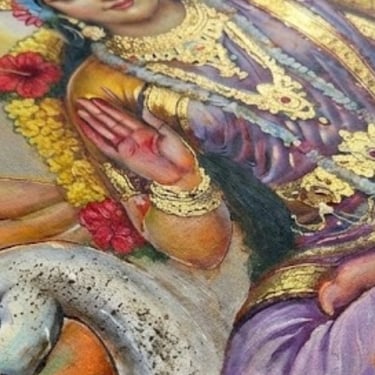
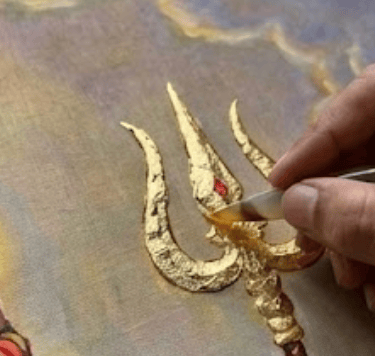
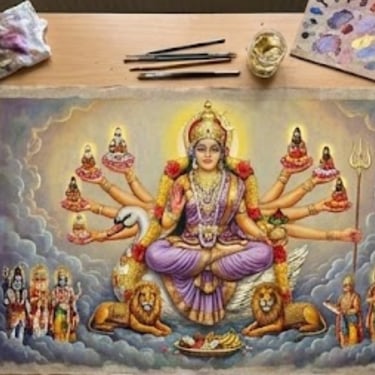
This is the supreme form of Adi Arunachaleswari Akhilandeswari Ayur Devi, not merely the Goddess of medicine, but the presider over Life and Death. Capturing the hierarchy of the cosmos, this piece depicts the Mother holding the Amrutham pot of immortality, with even the Creator, Preserver, and Destroyer standing in reverence as she protects the greatest healers and sages (The Siddhas) in her very hands.
Material Architecture:
Medium: Mixed Media, Temple Soil, Granite Dust & Raw Ochre on Burlap.
Geographical Origin: Thaanthondri Rudra Sai Baba Temple, India.
Era: Yatra Phase II (2018).
Archive Ledger: #IND012: The Cosmic Healer (Ayur Devi).
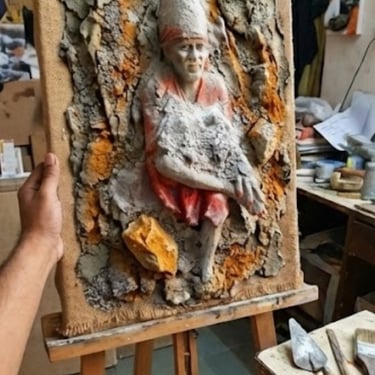
Provenance & Narrative:
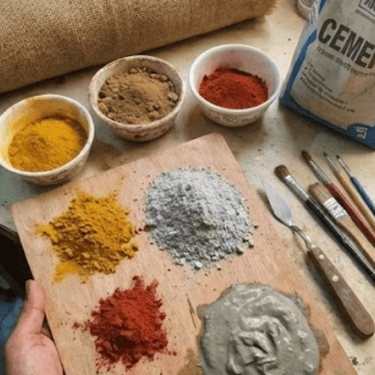
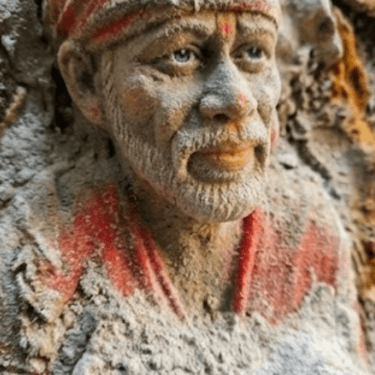
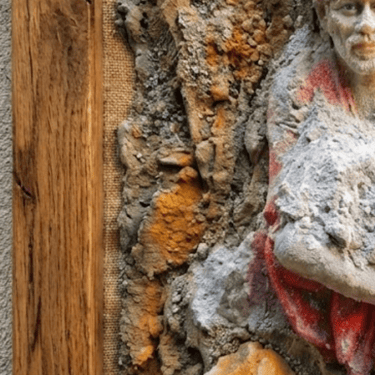
Usually, we carve God out of stone; here, God emerged from the stone. The Swayambu (Self-Manifested) Baba is not an idol, but an event. Avoiding the polished look of traditional Sai portraits, this piece explores the energy of 'Auto-Genesis,' focusing entirely on the raw, rudra-like power of the earth birthing a saint.
Material Architecture:
Medium: Mixed Media, Temple Soil, Granite Dust & Raw Ochre on Burlap.
Geographical Origin: Thaanthondri Rudra Sai Baba Temple, India.
Era: Yatra Phase II (2018).
Archive Ledger: #IND011: The Earth Element (Swayambu Sai).
SHATAKSHI (THE 100 EYES)


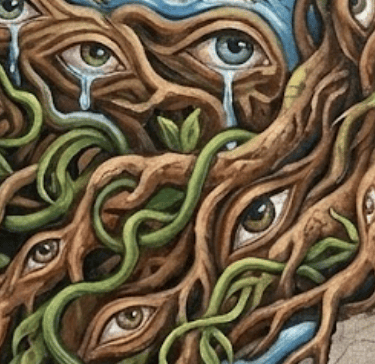
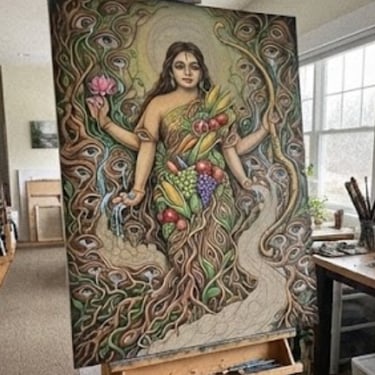
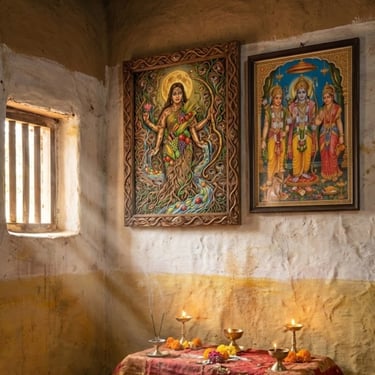
Provenance & Narrative:
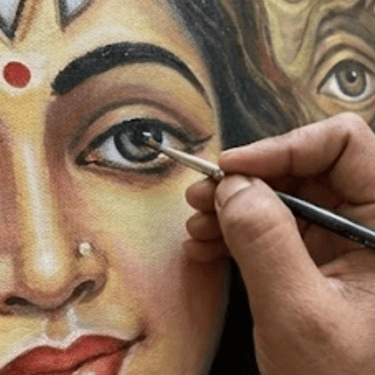
Shakambari is the Goddess who fed the world from her own body during a hundred-year drought. She is the ultimate mother who becomes the meal to sustain her children. Exploring 'Sacrifice' and 'Abundance,' this piece captures the intense, weeping compassion of the Earth that continues to feed us despite our neglect.
Material Architecture:
Medium: Oil, Vegetable Dyes, Roots & River Clay on Linen.
Geographical Origin: Thaanthondri Rudra Sai Baba Temple, India.
Era: Yatra Phase II (2018).
Archive Ledger: #IND013: The Endless Nourishment (Shakambari Devi).
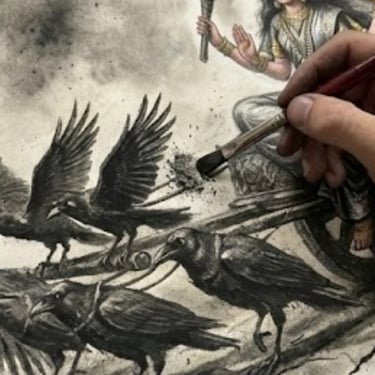
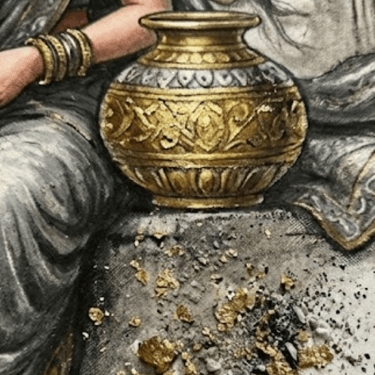
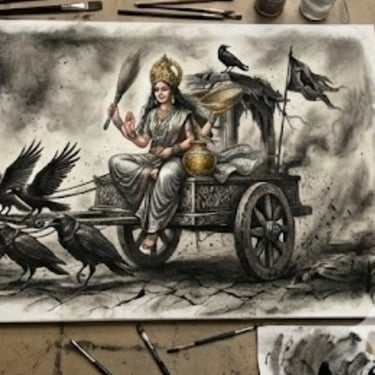
THE SMOKE WIDOW (DHOOMAVATI)
Provenance & Narrative:
Dhoomavati is the 'Widow Goddess'; the one who swallows the world. Representing the time after destruction and before creation, she is the terrifying silence of the void. This artwork acknowledges the beauty in the breakdown, a portrait of the wisdom that only comes when everything else has been stripped away.
Material Architecture:
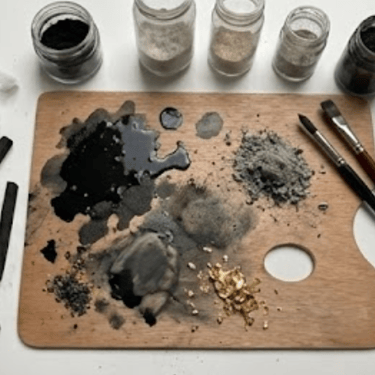
Medium: Gold Flakes, Charcoal, Wood Ash, Bone Dust & Black Ink on Canvas.
Geographical Origin: Thaanthondri Rudra Sai Baba Temple, India.
Era: Yatra Phase II (2018).
Archive Ledger: #IND014: The Primordial Void (Dhoomavati Devi).
GANGTOK: THE CONVERGENCE OF GUARDIANS
In the mist-shrouded peaks of Sikkim, ancient lines blur. Here, the Vedic and the Tantric do not compete; they coexist seamlessly as guardians of the high Himalayas. This third phase of the Yatra explores three distinct energetic frequencies, moving from the esoteric heights of the monasteries down to the grounded, rhythmic warmth of the Himalayan people. Utilising physical elements like Himalayan Rock Salt, Glacial Water, and Temple Sindoor, this collection spans the electric presence of Guru Rinpoche, the pure devotion found at Hanuman Tok, and the ultimate, elusive search for the deathless Yogi in the high-altitude passes.
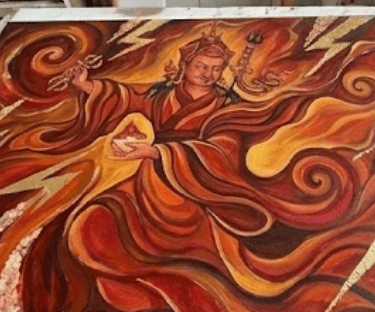
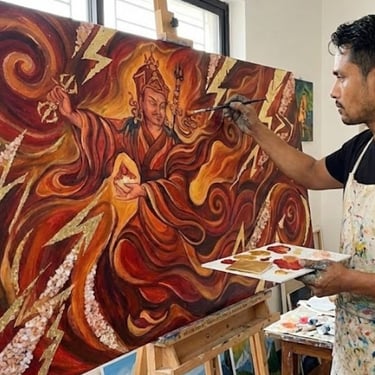
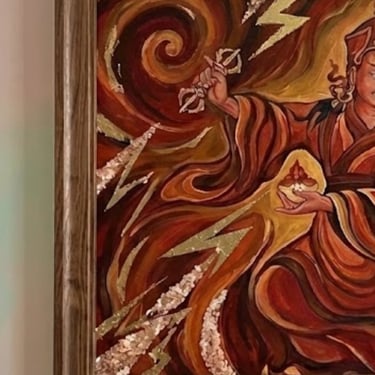
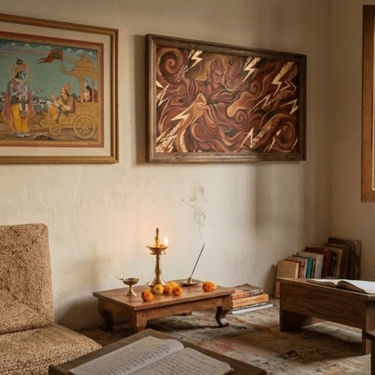
THE SECOND BUDDHA (GURU RINPOCHE)
Provenance & Narrative:
Padmasambhava, the 'Second Buddha,' is the master of transformation who tamed the land with magic. Experiencing his presence within the monastery precinct was not subtle, it was a visceral, electric surge. Incorporating actual Himalayan Rock Salt, this piece represents the 'Vajra': the indestructible diamond will required to cut through worldly illusion and command reality.
Material Architecture:
Medium: Acrylic, Gold Leaf & Himalayan Rock Salt on Canvas.
Geographical Origin: Gangtok (Monastery Precinct), India.
Era: Yatra Phase III (2019).
Archive Ledger: #IND015: The Lotus Born (Padmasambhava).
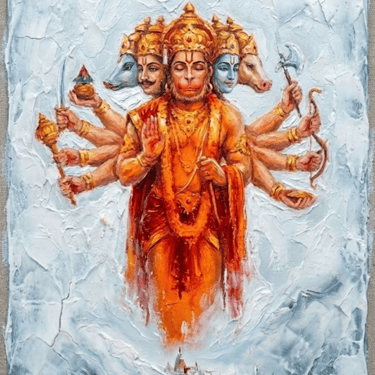
SANJEEVANI (HANUMAN TOK)
Provenance & Narrative:
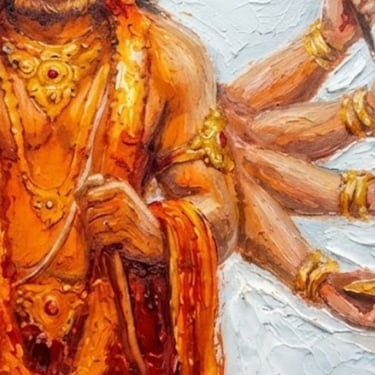
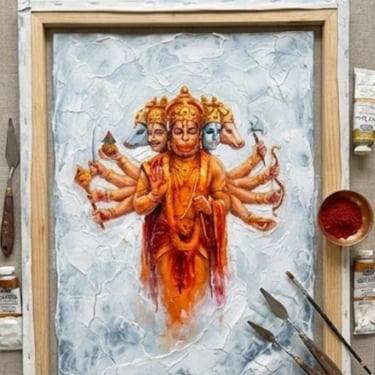
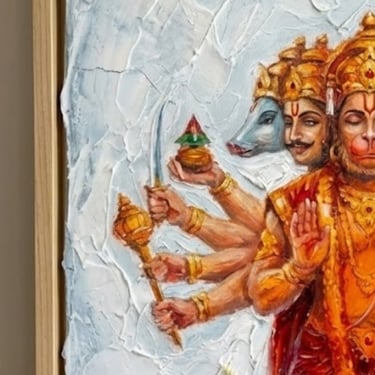
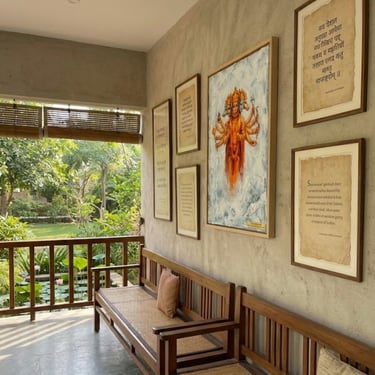
High above the city, maintained by the Indian Army, sits the temple of Hanuman. In stark contrast to the fierce tantra of the surrounding valleys, this artwork captures an energy of pure, wind-swept devotion (Bhakti). It utilises authentic Temple Sindoor to physically anchor the frequency of absolute loyalty, resilience, and vital life force.
Material Architecture:
Medium: Oil, Cold Wax & Temple Sindoor on Linen.
Geographical Origin: Hanuman Tok, Gangtok, India.
Era: Yatra Phase III (2019).
Archive Ledger: #IND016: The Air Guardian.
KRIYA MIST (THE SEARCH FOR BABAJI)
Provenance & Narrative:
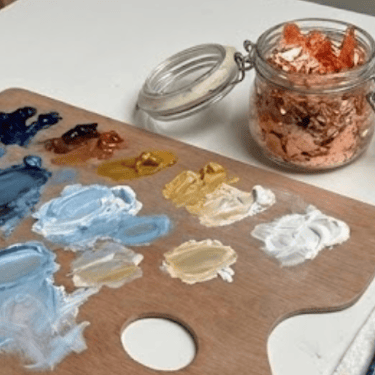
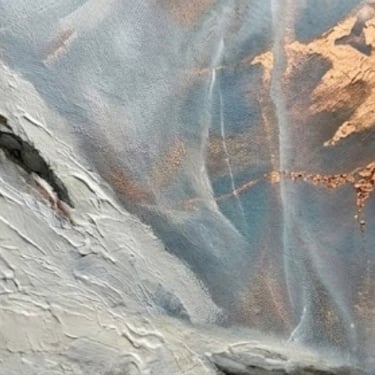
In the extreme altitudes of the Himalayas, every shadow takes the form of a sage. The final frequency Raajashri sought in Sikkim was that of Mahavatar Babaji, the deathless Yogi of the Kriya lineage. Integrating actual Himalayan glacial water directly into the oil and copper leaf, this piece is a physical manifestation of the eternal, elusive search for ultimate spiritual mastery.
Material Architecture:
Medium: Oil, Copper Leaf & Himalayan Glacial Water on Linen.
Geographical Origin: North Sikkim / High Altitude Passes, India.
Era: Yatra Phase III (2019).
Archive Ledger: #IND017: The Eternal Yogi (The Search).


THE EASTERN VEIN
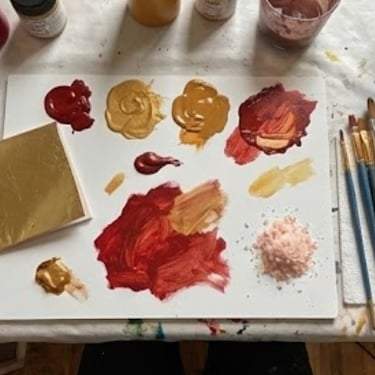
The journey east is a descent into the raw, unfiltered current of creation. In Assam and West Bengal, spirituality is not polite; it is entirely visceral, smelling of wet earth, burning pyres, and deep red hibiscus. This is the undeniable land of the Mother in her fiercest forms. From the bleeding womb of the earth at Kamakhya to the smoky cremation grounds of Tara Pith and the chaotic intensity of Kali Ghat in Kolkata, this chapter confronts the energy that simultaneously births universes and destroys egos. It is a physical documentation of a frequency that can only be understood through absolute surrender.
THE NILACHAL BLEED (KAMAKHYA)
Provenance & Narrative:
Kamakhya is the undisputed center of Tantric gravity, regarded as the yoni (womb) of the Earth Mother. It is a highly charged space where the divine feminine is revered not merely as an abstract spirit, but as raw biological power. Utilising authentic Kamakhya Red Earth, this piece anchors that immense terrestrial and matriarchal energy directly into the canvas.
Material Architecture:
Medium: Mixed Media, Kamakhya Red Earth (Sindoor) & Iron Oxide on Linen.
Geographical Origin: Guwahati, Assam, India.
Era: Yatra Phase I (2016).
Archive Ledger: #IND018: The Earth's Menstruation (Kamakhya).
SHMASHANA TARA (THE CREMATION GROUND)
CITY OF THE BLACK MOTHER (KALIGHAT)
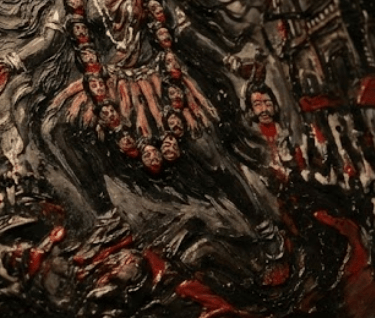
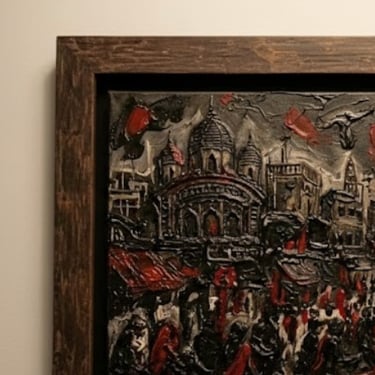
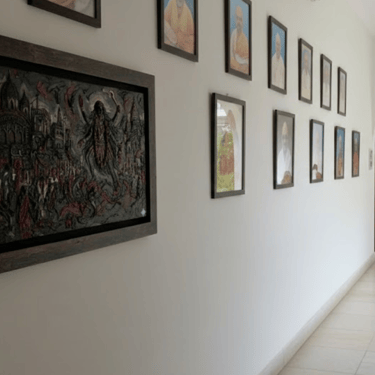
Provenance & Narrative:
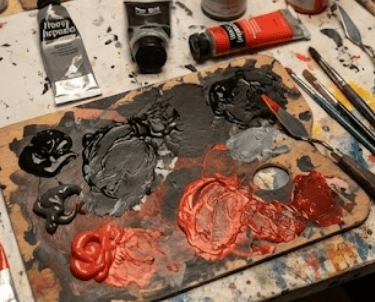
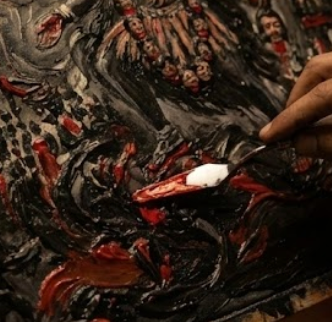
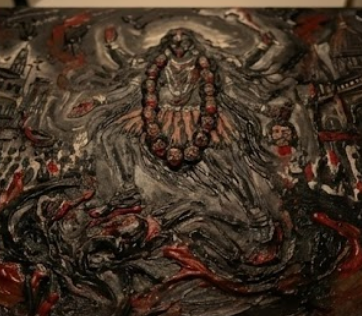
In the very heart of Kolkata's relentless chaos sits Kali Ghat, universally recognised as one of the oldest and most potent seats of the Goddess Kali. This piece utilises heavy, tar-like mediums and striking vermilion to mirror the suffocating yet fiercely protective density of the city and its presiding deity.
Material Architecture:
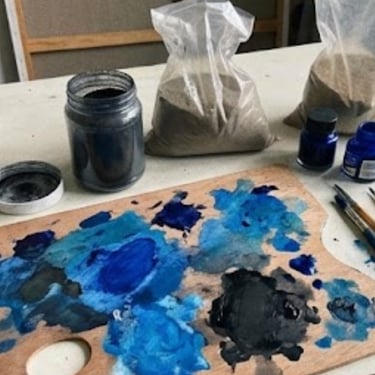
Medium: Heavy Impasto Acrylic, Tar-like Mediums & Vermilion on Canvas.
Geographical Origin: Kolkata, West Bengal, India.
Era: Yatra Phase I (2016).
Archive Ledger: #IND020: The Fierce Mother (Kali Ghat, Kolkata).
THE BURNING OF DESIRE (UMANANDA)
Provenance & Narrative:
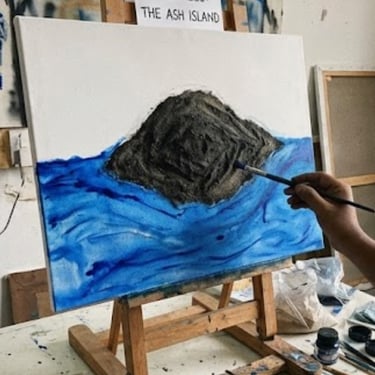
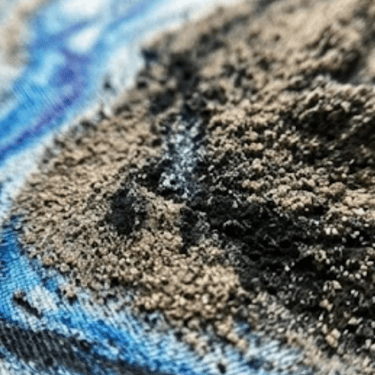
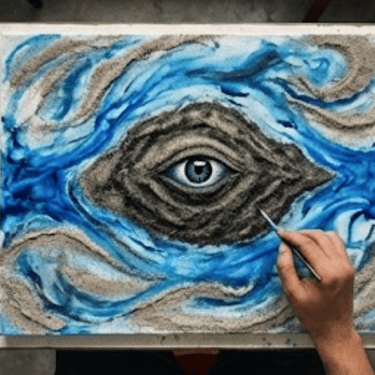
In the middle of the raging Brahmaputra River sits Peacock Island, home to the Umananda temple. Legend designates this space as Bhasmacala, the Hill of Ashes, where Shiva opened his Third Eye and incinerated the God of Desire (Kamadeva) into nothingness. By integrating actual Brahmaputra river sand, this artwork captures the ultimate focal point of destruction and the complete cessation of worldly attachment.
Material Architecture:
Medium: Mixed Media, Brahmaputra River Sand, Charcoal & Blue Ink on Canvas.
Geographical Origin: Umananda Island, Assam, India.
Era: Yatra Phase I (2016).
Archive Ledger: #IND021: The Ash Island (Umananda).
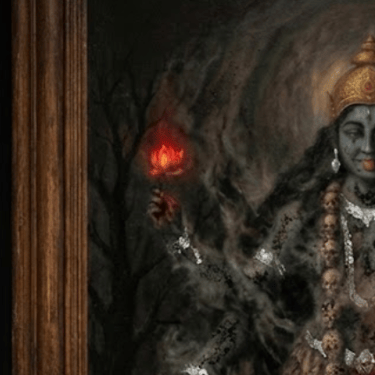
Provenance & Narrative:
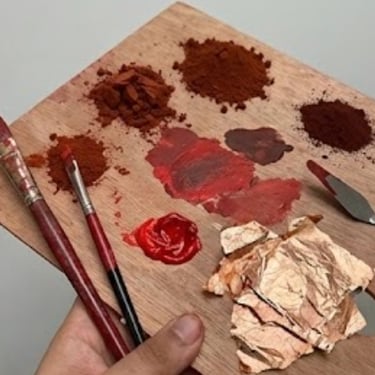
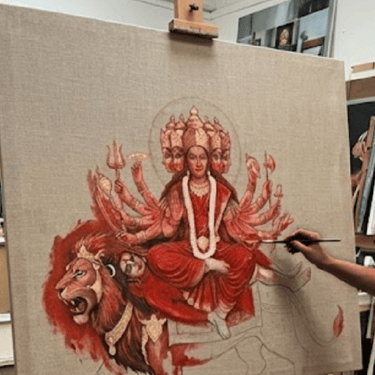
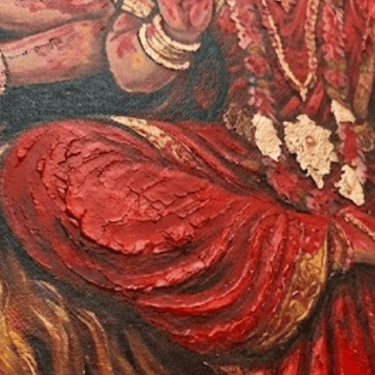
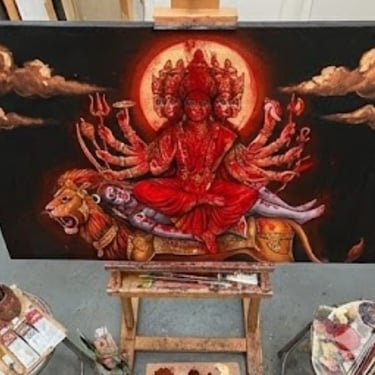
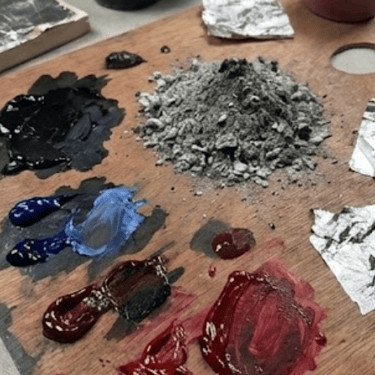
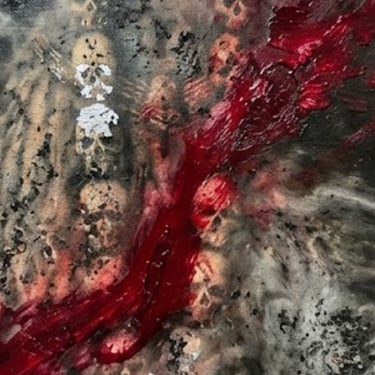
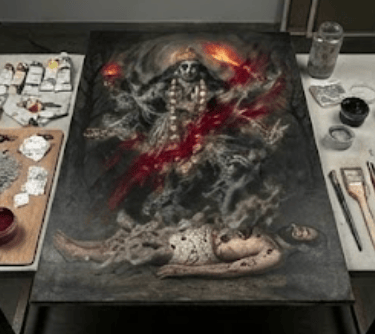
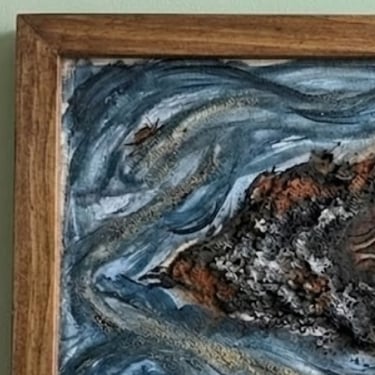
Tara Pith exists squarely on the threshold between the living and the dead. It operates as a major Shakti Peetha located within an active cremation ground, a space where tantrics perform deep sadhana amidst the burning pyres. This artwork incorporates actual wood ash to physically bridge that threshold, capturing the intense, smoky threshold of mortality and liberation.
Material Architecture:
Medium: Oil, Wood Ash & Deep Crimson Pigment on Canvas.
Geographical Origin: Birbhum District, West Bengal, India.
Era: Yatra Phase I (2016).
Archive Ledger: #IND019: The Smoky Mother (Tara Pit, West Bengal).
THE VALLEY OF TANTRA
In the bowl of the Kathmandu Valley, spirituality is not merely hidden; it is entirely architectural. Every brick, every wooden strut, and every stone street is physically consecrated. This chapter documents the archives' time along the banks of the Bagmati River, exploring the profound relationship between Pashupatinath (The Lord of Life) and the potent Shakti Peeths that fiercely guard the valley. Here, the masculine and feminine energies are not separate concepts; they are locked in a permanent, secret, and structural embrace.
THE LORD OF ANIMALS (PASHUPATINATH)
Provenance & Narrative:
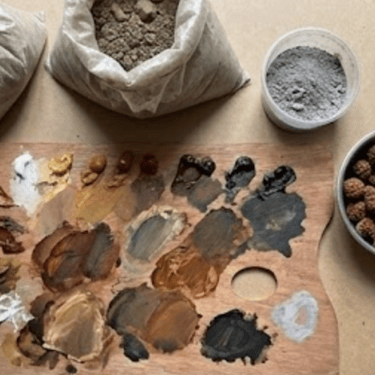
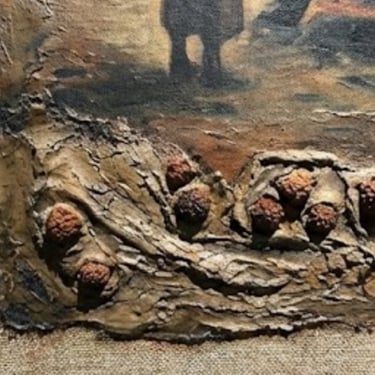
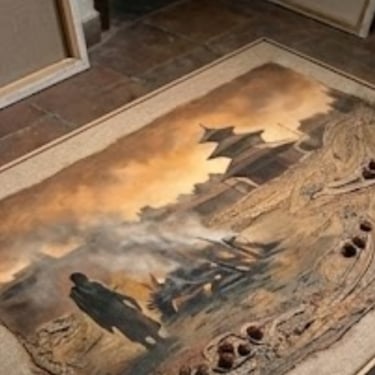
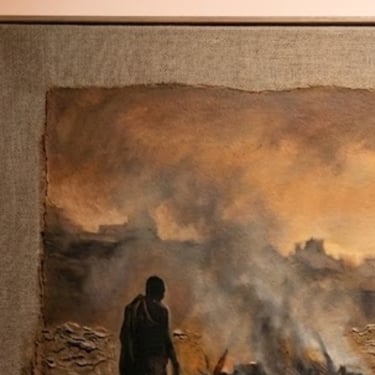
Pashupatinath is revered as the Lord of all beings (Pashu). Standing by the active cremation ghats of the Bagmati River, watching the heavy smoke rise against the backdrop of the ancient pagoda, one is confronted with the ultimate truth: Shiva is the absolute master of our animalistic nature and mortality. By integrating actual Bagmati river clay and physical impressions of Rudraksha beads, this piece serves as a raw, geological testament to the cycle of life and death.
Material Architecture:
Medium: Oil, River Clay (Bagmati), Wood Ash & Rudraksha Bead Impressions on Linen.
Geographical Origin: Pashupatinath Temple, Kathmandu, Nepal.
Era: Yatra Phase III (2019).
Archive Ledger: #IND022: The Lord of Animals (Pashupatinath).
THE QUEEN OF SPACE (BHUVANESHWARI)
Provenance & Narrative:
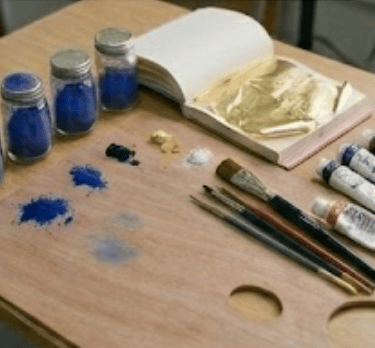
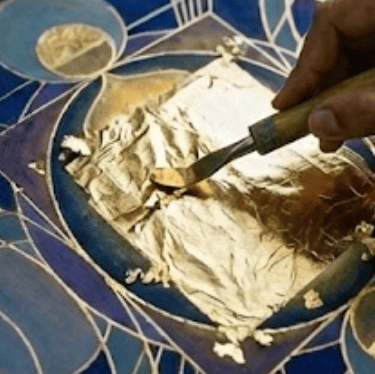
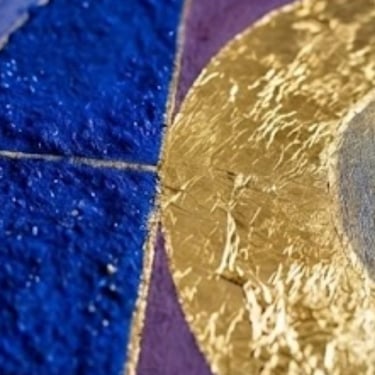
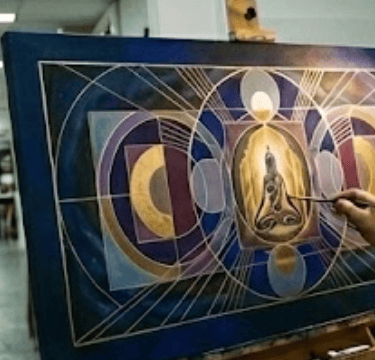
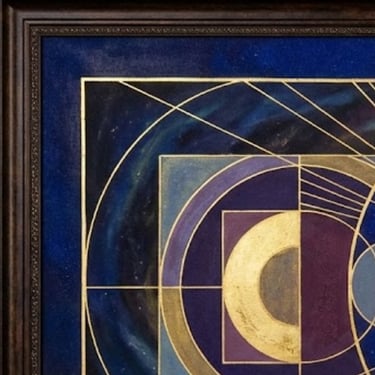
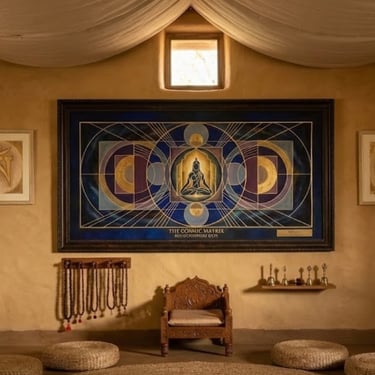
Bhuvaneshwari is recognised as the Fourth Mahavidya; the Goddess who embodies the physical universe itself. She is not an object within space, but rather the actual space in which all things happen. This highly geometric artwork utilises premium Lapis Lazuli dust and 24k Gold Leaf to map the cosmic matrix, providing a visual representation of the vast, organising intelligence of the universe.
Material Architecture:
Medium: Mixed Media, Lapis Lazuli Dust & 24k Gold Leaf on Canvas.
Geographical Origin: Kathmandu Valley, Nepal.
Era: Yatra Phase III (2019).
Archive Ledger: #IND023: The Cosmic Matrix (Bhuvaneswari).
THE SECRET CAVE (GUHESWARI)
Provenance & Narrative:
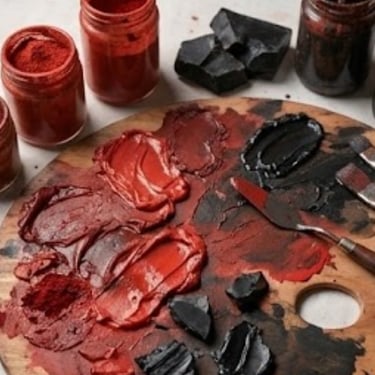
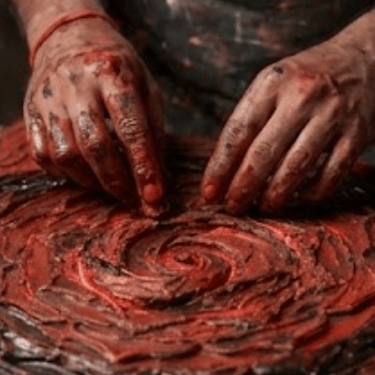
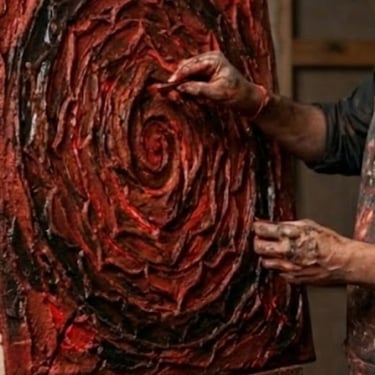
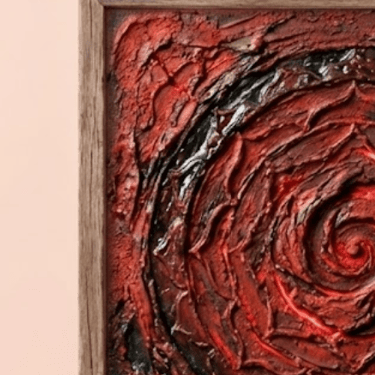
Just across the river from Shiva lies Guheswari, the highly venerated Shakti Peeth representing the 'Secret' (Guha). It is recognised as the root energy, the deeply hidden, subterranean power that ultimately fuels the masculine. This piece utilises heavy impasto and Temple Red Earth (Sindoor) to create a visceral, spiraling focal point, anchoring the intense, concealed power of the divine feminine.
Material Architecture:
Medium: Heavy Impasto, Red Earth (Sindoor) & Black Wax on Canvas.
Geographical Origin: Guheswari Temple Precinct, Kathmandu, Nepal.
Era: Yatra Phase III (2019).
Archive Ledger: #IND024: The Secret Root (Guheswari Shakti Peeth).
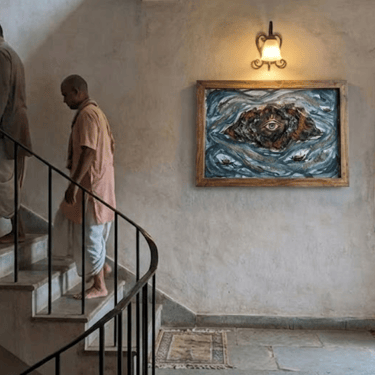
THE UNBLINKING EYE (SWAYAMBHU)
Provenance & Narrative:
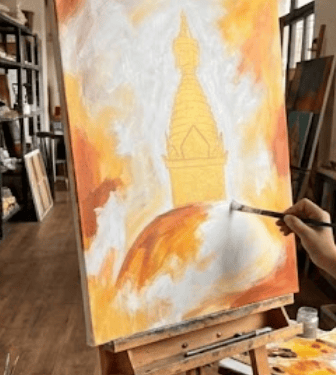
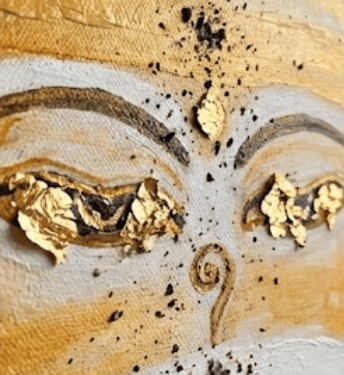
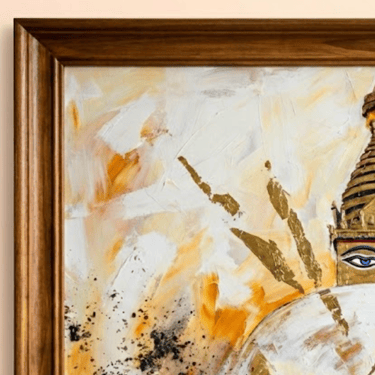
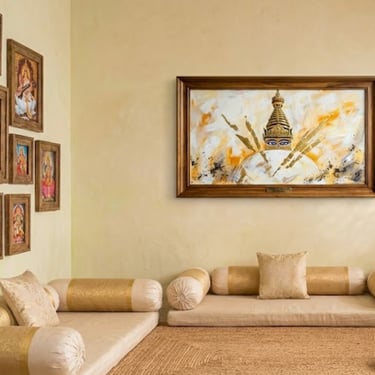
High above the Kathmandu Valley sits Swayambhunath (The Monkey Temple). Here, the dominant presence of the Buddha is not found in a conventional statue, but rather in the massive eyes painted directly onto the Stupa. This artwork incorporates authentic ritual incense ash to capture the essence of the 'Silent Watcher', the supreme consciousness observing the world with absolute compassion and zero judgment.
Material Architecture:
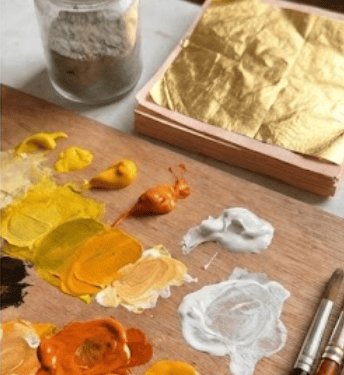
Medium: Acrylic, 24k Gold Leaf & Ritual Incense Ash on Canvas.
Geographical Origin: Swayambhunath Stupa, Kathmandu, Nepal.
Era: Yatra Phase III (2019).
Archive Ledger: #IND025: The Silent Watcher (Swayambhunath).